Blog
How to Choose the Right Printing Method for Custom Promotional Products
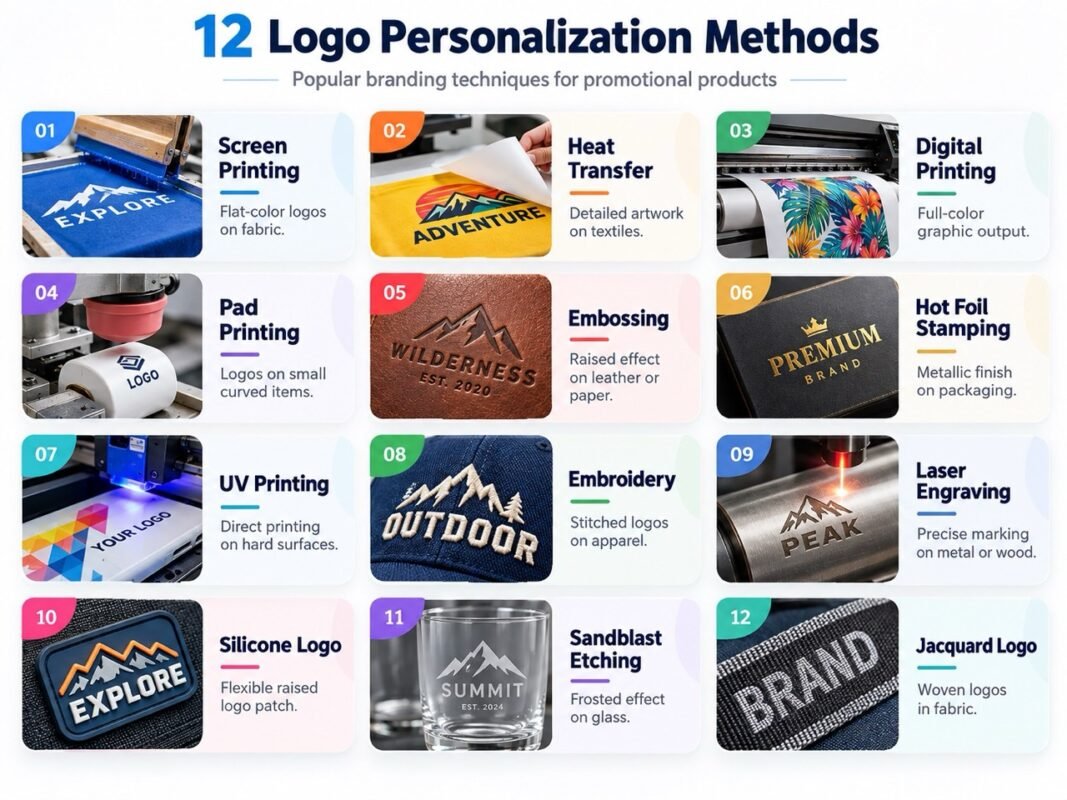
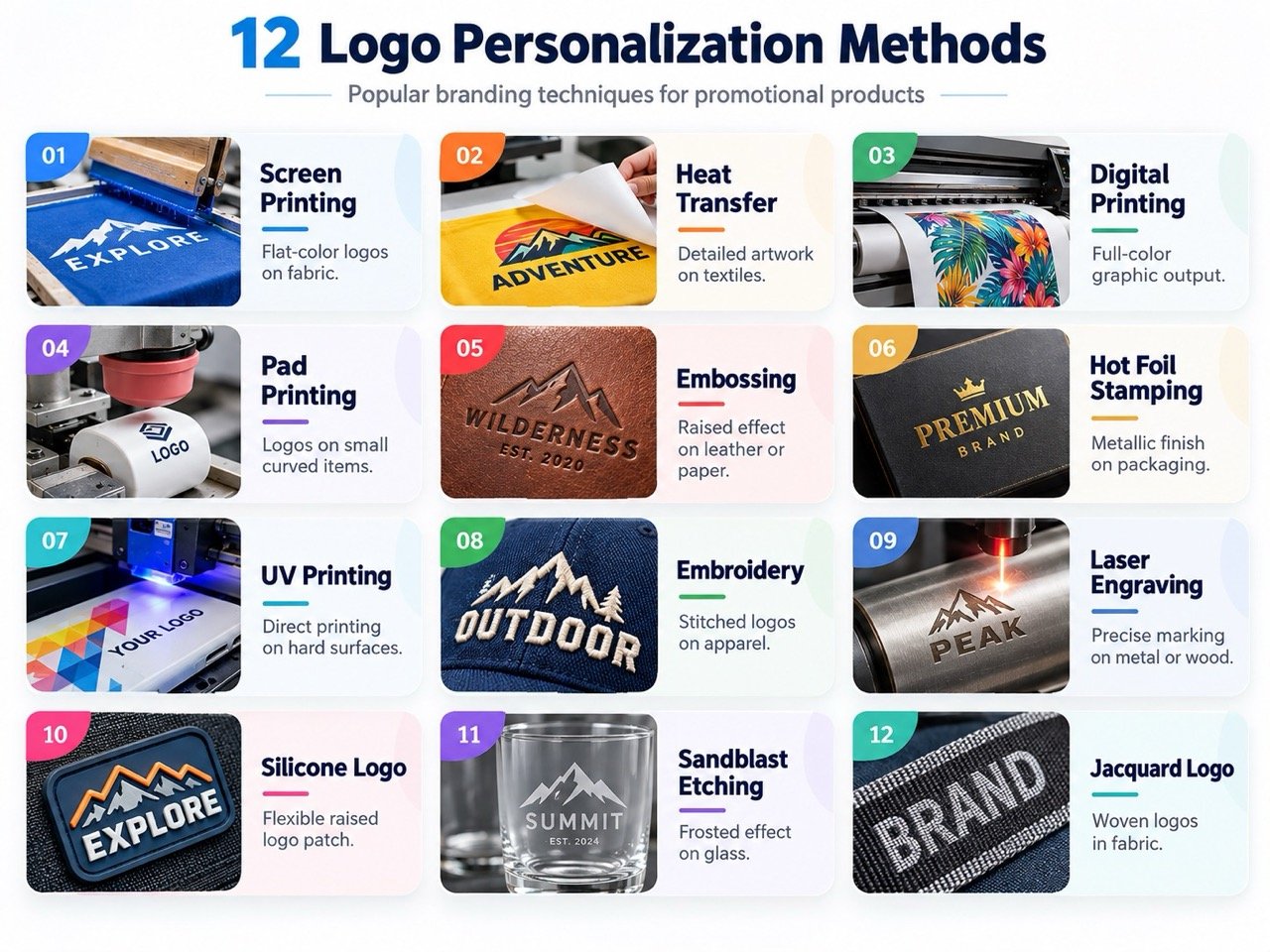
12 Logo Printing & Customization Methods:
A logo that looks sharp on a cotton tote bag may not produce the same result on a stainless steel bottle, a leather gift box, or a knitted beanie.
The difference comes down to more than printing quality. Material, surface texture, logo complexity, product shape, and intended use all influence which customization method will work.
For promotional product distributors and corporate buyers, choosing the wrong method can lead to unclear details, peeling prints, unexpected setup costs, or samples that look different from the original artwork.
Here are 12 commonly used logo customization methods, with their suitable materials, typical applications, advantages, and limitations.
1. Screen Printing – For Simple Logos and Repeat Orders
Screen printing pushes ink through a prepared mesh screen onto the product surface. Each spot color generally requires a separate screen.
Suitable materials: Cotton, canvas, polyester, and compatible non-woven polypropylene or other prepared surfaces.
Common products: Tote bags, drawstring bags, T-shirts, umbrellas, fabric pouches, and event merchandise.
Advantages:
Produces solid, consistent colors for simple logos.
Often economical for larger quantities using the same artwork.
Works well for bold graphics and relatively large printing areas.
Limitations:
Additional colors may require more screens, increasing setup costs.
Gradients and photographic images require specialized screening and may not be practical for every product.
Seams, coatings, textured surfaces, and uneven fabric can affect printing quality.
Purchasing tip: For a large order of cotton promotional bags featuring a one- or two-color logo, screen printing is often worth comparing first. For coated waterproof fabrics or non-woven polypropylene, confirm ink compatibility before production.
2. Heat Transfer Printing – For Detailed Logos on Textile Products
Heat transfer uses heat and pressure to bond a prepared graphic or transfer material to the product surface.
Depending on the process, the transfer may be a printed film, a DTF transfer, or another heat-applied decoration.
Suitable materials: Cotton, polyester, blends, and selected nylon fabrics when the transfer adhesive and temperature are compatible.
Common products: Sports bags, caps, T-shirts, uniforms, backpacks, and textile promotional gifts.
Advantages:
Supports multicolor logos, fine details, and complex artwork.
Can be practical for smaller orders without separate screens for every color.
Produces consistent designs when application conditions are controlled.
Limitations:
Some transfers create a noticeable layer on the fabric.
Incorrect heat, pressure, or adhesive selection may cause lifting or peeling.
Heat-sensitive fabrics and water-resistant coatings require special attention.
Purchasing tip: When customizing polyester backpacks or sportswear, check whether the material can withstand the transfer temperature. Ask for adhesion and care testing on the actual fabric rather than relying only on a digital mockup.
3. Digital Printing – For Full-Color Textile Designs
Digital printing applies artwork using digital print technology. In textile production, this may include direct-to-fabric printing, direct-to-garment printing, or dye-sublimation printing.
The appropriate process depends on the fabric composition.
Suitable materials: Cotton with compatible direct-printing systems, polyester for dye sublimation, and other fabrics supported by specific textile inks and pretreatments.
Common products: T-shirts, fabric bags, scarves, event banners, flags, and fully customized textile panels.
Advantages:
Reproduces photographs, gradients, and detailed multicolor artwork.
Avoids separate color screens.
Useful for multiple designs or artwork that changes between orders.
Limitations:
Different fabrics require different inks and processing.
Dye sublimation is generally suited to polyester or suitably coated products, particularly light-colored substrates.
Fabric texture, pretreatment, and color management influence the finished appearance.
Purchasing tip: For a promotional bag featuring full-color artwork, confirm whether the supplier plans to print the fabric before sewing or decorate the finished bag. The construction of the bag can determine the available printing area.
Digital printing is a broad category. Dye-sublimation transfer, for example, also uses heat, but it is different from applying a conventional logo transfer film.
4. Pad Printing – For Small or Curved Promotional Items
Pad printing uses a flexible silicone pad to transfer ink from an engraved printing plate onto the product.
The flexible pad makes it suitable for surfaces that are difficult to print using a flat screen.
Suitable materials: Compatible plastics, coated metals, glass, and other surfaces with suitable printing inks or pretreatment.
Common products: Pens, keychains, electronic accessories, small plastic components, and selected drinkware.
Advantages:
Handles small, curved, and slightly irregular surfaces.
Reproduces simple logos accurately within a limited print area.
Can be efficient for repeated high-volume production.
Limitations:
The printing area is typically small.
Multiple colors require careful registration and additional setup.
Photographic or highly detailed full-color graphics are generally less suitable.
Purchasing tip: For a plastic pen or small promotional accessory with a single-color logo, pad printing may be a practical solution. If the artwork contains several colors or gradients, compare UV printing where the product shape allows it.
5. Embossing – For Subtle, Tactile Branding
Embossing and debossing create a logo through pressure rather than applying colored ink.
Embossing raises the design, while debossing presses it into the surface. The two terms are often used together, but the resulting effects are different.
Suitable materials: Genuine leather, suitable PU leather, paper, cardboard, and selected flexible packaging materials.
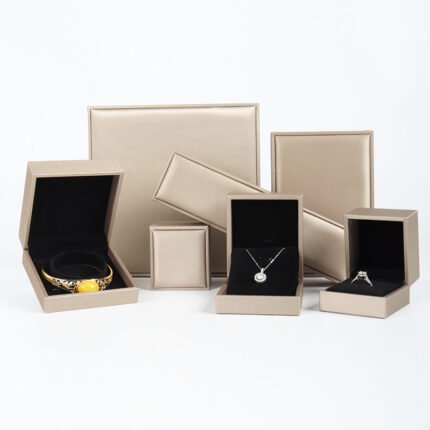
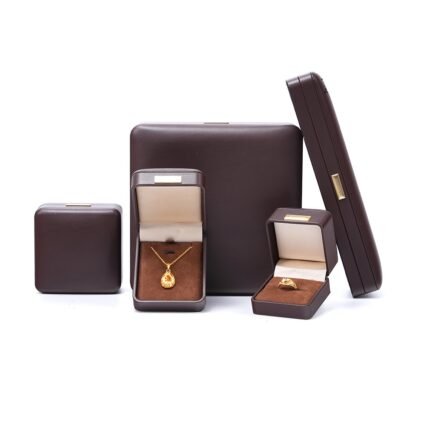
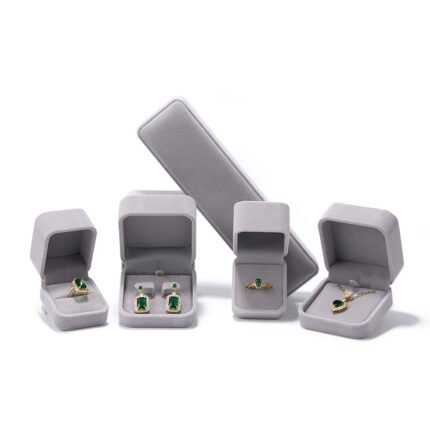
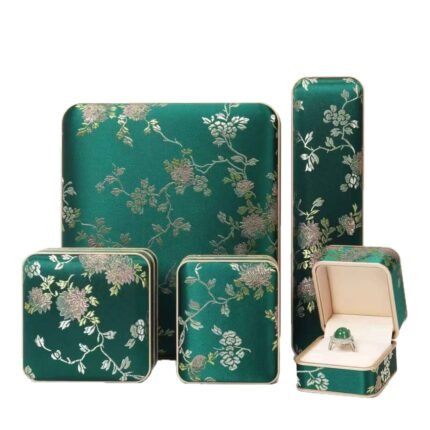
Common products: Leather notebooks, wallets, document folders, jewelry packaging, gift boxes, and luggage accessories.
Advantages:
Creates a tactile logo without introducing another printed color.
Offers understated branding for corporate gifts and packaging.
The impression can remain visible without relying on surface ink.
Limitations:
Requires a customized die or tooling.
Very fine lines and small lettering may not form clearly.
Material thickness, softness, grain, and pressure affect the definition of the logo.
Purchasing tip: For a leather notebook or jewelry box, request a sample showing the actual impression depth. A design that looks clear on smooth PU leather may appear softer on heavily textured leather.
6. Hot Foil Stamping – For Metallic Logo Finishes
Hot foil stamping applies a decorative foil to a surface using a heated die and pressure.
Gold, silver, and other foil finishes can create a reflective effect without using metallic printing ink.
Suitable materials: Paper, cardboard, coated packaging materials, and suitable PU or genuine leather.
Common products: Gift boxes, jewelry packaging, notebooks, presentation folders, and branded stationery.
Advantages:
Creates reflective metallic finishes that standard ink cannot reproduce in quite the same way.
Works particularly well for logos, lettering, and decorative borders.
Can be combined with embossing or debossing on compatible materials.
Limitations:
Requires tooling and controlled processing conditions.
Small details and large solid-foil areas may need artwork adjustments.
Foil adhesion and wear resistance depend on the substrate and handling conditions.
Purchasing tip: For a black jewelry box with a gold logo, hot foil stamping and metallic-color printing may look different under natural light. Ask for a physical sample if the reflective finish is important to the design.
7. UV Printing – For Full-Color Logos on Hard Surfaces
UV printing uses ink that is cured by ultraviolet light during the printing process.
It is commonly used for direct printing on rigid products, including some shapes that conventional flatbed printing cannot easily accommodate when suitable equipment is available.
Suitable materials: Compatible plastics, acrylic, coated metal, wood, glass, and other prepared surfaces.
Common products: Phone accessories, keychains, notebooks, gift boxes, acrylic gifts, and selected bottles or tumblers.
Advantages:
Supports multicolor designs, gradients, and small graphic details.
Allows printing directly onto many finished products.
Some equipment supports white ink, gloss effects, or raised ink textures.
Limitations:
Ink adhesion varies across different materials, coatings, and surface treatments.
Some rigid UV inks may not perform well on products that bend repeatedly.
Scratch resistance and washing performance must be confirmed for the intended use.
Purchasing tip: If you need a colorful logo on a stainless steel tumbler, compare UV printing with laser engraving. UV printing offers color flexibility, while laser marking creates a different appearance and avoids a conventional printed ink layer. Always confirm the exact bottle finish and decoration requirements.
8. Embroidery – For Caps, Clothing, and Fabric Accessories
Embroidery uses thread to stitch the logo directly into the textile surface.
It is commonly selected when a brand wants visible texture rather than a flat printed design.
Suitable materials: Cotton twill, canvas, polyester fabric, fleece, denim, and suitable knitted textiles.
Common products: Baseball caps, beanies, jackets, polo shirts, backpacks, and work uniforms.
Advantages:
Creates a raised, textured appearance.
Does not depend on a printed ink layer.
Works well for clearly defined logos on properly stabilized fabrics.
Limitations:
Very small text, thin lines, and gradients may not reproduce accurately.
Large, dense embroidery can distort lightweight or stretchy fabrics.
Stitch count, logo size, thread colors, and backing affect cost and production.
Purchasing tip: For an embroidered cap, pay attention to the smallest letters and the width of each logo element. Simplifying narrow lines can improve readability. A physical stitch-out is particularly useful for small or complicated logos.
9. Laser Engraving – For Metal, Wood, and Selected Leather Products
Laser engraving or marking uses a focused laser beam to change the appearance of a material.
Depending on the material and laser system, the process may remove a surface coating, engrave the substrate, or create a mark through a controlled surface reaction.
Suitable materials: Stainless steel, anodized aluminum, coated metals, wood, bamboo, and certain leather materials.
Common products: Metal bottles, stainless steel tumblers, keychains, wooden gift boxes, pens, and desk accessories.
Advantages:
Produces fine logos without conventional printing ink.
Suitable for permanent-style marking on many compatible materials.
Works well for understated branding and small personalization areas.
Limitations:
Cannot generally reproduce full-color logos.
Contrast depends on the substrate, coating, and laser process.
Wood may show variations in tone, while some coatings or leather finishes can react unpredictably to heat.
Purchasing tip: On a powder-coated bottle, laser processing may reveal the underlying material by removing the coating. On bare stainless steel, a different laser process may be required to create a visible mark. These two results should not be assumed to look identical.
10. Silicone Logo – For Raised, Flexible Branding
Silicone branding typically involves a molded silicone patch or a specialized silicone transfer.
A molded patch can be sewn or otherwise attached to a product, while silicone transfer applications require compatible textile materials and bonding conditions.
Suitable materials: Textile surfaces that support sewn-on patches or approved heat-applied silicone transfers.
Common products: Outdoor caps, backpacks, sportswear, jackets, and fabric accessories.
Advantages:
Creates a dimensional, tactile logo.
Suitable for bold designs where a raised appearance is desired.
Flexible constructions can work well on textile products when appropriately specified.
Limitations:
Molded designs may involve tooling costs.
Small lettering and intricate details can be difficult to reproduce.
Attachment strength, flexibility, and washing resistance depend on patch construction and application method.
Purchasing tip: Before specifying a silicone logo, decide whether you want a sewn-on molded patch or a heat-applied design. These are different constructions with different costs and production requirements.
Also, silicone should not be confused with silicon, and not every rubber-look patch is made from silicone. The material should be confirmed in the product specification.
11. Sandblast Etching – For Frosted Logos on Glass
Sandblast etching uses an abrasive stream and a protective stencil to create a matte or frosted design on an exposed surface.
It is commonly used to customize glassware without applying a colored ink layer.
Suitable materials: Glass and selected other materials that can be safely processed using abrasive etching.
Common products: Wine glasses, champagne flutes, drinking glasses, glass awards, and decorative glass gifts.
Advantages:
Creates a distinctive frosted surface effect.
The design is formed in the glass rather than applied as an ink film.
Suitable for simple logos and lettering on glass gifts.
Limitations:
Does not reproduce multicolor artwork.
Very fine detail requires careful stencil preparation.
Curved surfaces, thin glass, and complicated product shapes can affect processing.
Purchasing tip: For branded wine glasses, confirm the logo position and available etching area. A wide design that looks balanced on a flat drawing may appear distorted when placed around the curve of the glass.
12. Jacquard Logo – For Branding Built Into the Fabric
Jacquard logos are created through knitting or weaving rather than printed or embroidered onto a finished surface.
The design becomes part of the textile structure.
Suitable materials: Acrylic, polyester, cotton, wool, and other yarns or woven structures supported by the manufacturing process.
Common products: Knitted beanies, scarves, socks, lanyards, woven straps, and textile accessories.
Advantages:
Integrates the logo directly into the textile.
Does not rely on a separate surface print that can peel.
Works well for bold logos, repeating patterns, and large textile designs.
Limitations:
Artwork must fit the yarn colors, knitting gauge, and weaving construction.
Fine lettering, subtle gradients, and photographic details are generally unsuitable.
Custom knitting or weaving requires production planning and may involve higher minimum quantities than decorating stock products.
Purchasing tip: If a brand wants a large logo running across a knitted beanie, jacquard may be more suitable than embroidery. But if the logo is small and detailed, an embroidered or woven label may give a clearer result.
Jacquard must usually be planned during textile production; it cannot simply be added to an already finished beanie in the same way as embroidery.
Which Logo Method Should You Choose for Different Products?
The product material is the starting point, but it should never be the only consideration.
| Product | Methods to Consider | Main Decision |
|---|---|---|
| Cotton or canvas tote bags | Screen printing, heat transfer, digital printing | Simple spot colors or full-color artwork? |
| Non-woven promotional bags | Screen printing with compatible ink | Will the ink bond to the actual bag surface? |
| Polyester sports bags | Heat transfer, screen printing, embroidery | Is the fabric coated, heat-sensitive, or textured? |
| Baseball caps | Embroidery, heat transfer, silicone patches | Does the logo require fine detail or a raised finish? |
| Knitted beanies | Embroidery, jacquard, sewn-on patches | Should the logo sit on the fabric or become part of it? |
| Stainless steel drinkware | Laser marking, UV printing, compatible screen or pad printing | Is full color necessary, and how will the product be cleaned? |
| Glassware | Sandblast etching, suitable pad or UV printing | Is a frosted or colored logo required? |
| Leather and jewelry gift boxes | Embossing, debossing, hot foil stamping | Is the desired finish subtle, recessed, raised, or metallic? |
| Small plastic promotional items | Pad printing, UV printing | How complex is the artwork and how curved is the surface? |
These are starting points, not guaranteed combinations. The final decision should be based on the actual product material, dimensions, artwork, and confirmed production method.
How Does the Logo Method Affect Customization Cost?
The unit printing price alone rarely tells the full story.
A useful comparison should include the following cost factors:
| Cost Factor | Why It Matters |
|---|---|
| Setup and tooling | Screens, printing plates, embossing dies, and silicone molds may require one-time preparation costs |
| Logo colors | Additional spot colors may increase screen or pad-printing setup, while some digital methods handle multicolor artwork differently |
| Logo size and complexity | Larger embroidery areas may increase stitch counts; complicated designs can increase processing time |
| Order quantity | Fixed setup costs are distributed across the production quantity, changing the cost per unit |
| Number of print positions | Printing two sides or multiple locations usually requires additional operations |
| Material and product shape | Special coatings, curved surfaces, or restricted access may require different equipment or extra handling |
| Sampling and packaging | Physical approval samples, protective packaging, and finished product dimensions can influence the total landed cost |
For example, a one-color logo on several thousand canvas bags may favor screen printing because its setup costs can be spread across the order.
The same logo on a small trial quantity may lead to a different decision if transfer printing avoids substantial initial setup.
Similarly, embroidery may suit a simple logo on a cap, but a large design with dense stitching can change both the production cost and how the fabric behaves.
The most useful comparison is the total decorated product cost at the required quantity, not the printing cost viewed separately.
What Should Buyers Confirm Before Approving a Logo Sample?
A digital artwork file shows the intended design. It does not necessarily show how that design will behave on the finished product.
Before mass production, confirm:
Product material and finish: Exact fabric composition, coating, surface texture, or metal finish.
Logo size and position: Dimensions, distance from seams or edges, and whether the production equipment can access the area.
Color and detail: Approved artwork, required spot colors, minimum line thickness, and readability of small text.
Intended use: Expected washing, abrasion, outdoor exposure, or handling conditions that require testing.
Production approval: A physical sample or production-representative sample showing the actual logo method.
This is particularly important for products such as water bottles, workwear, backpacks, and outdoor accessories, where the logo may experience frequent handling or cleaning.
Final Thoughts: Choose the Method Around the Product
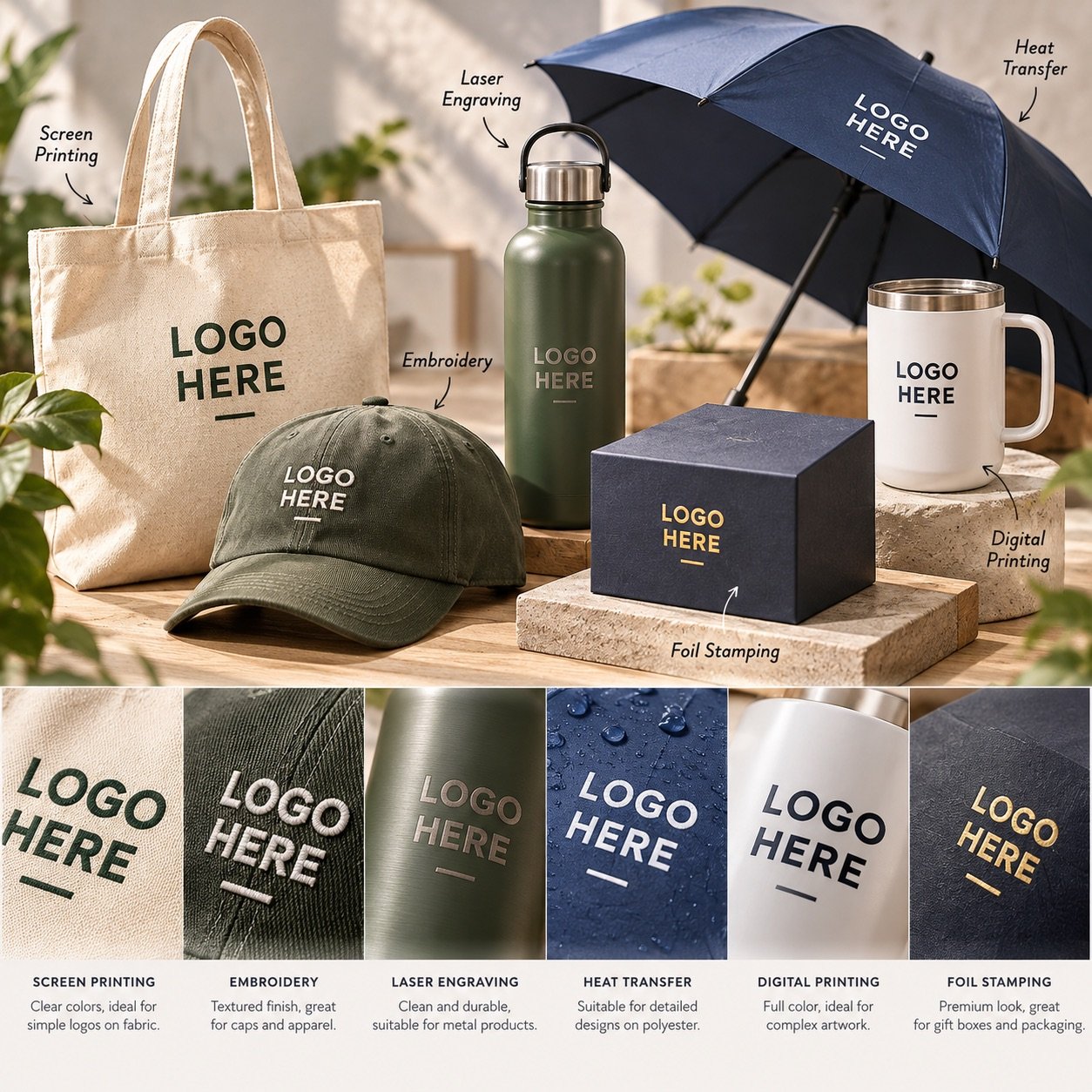
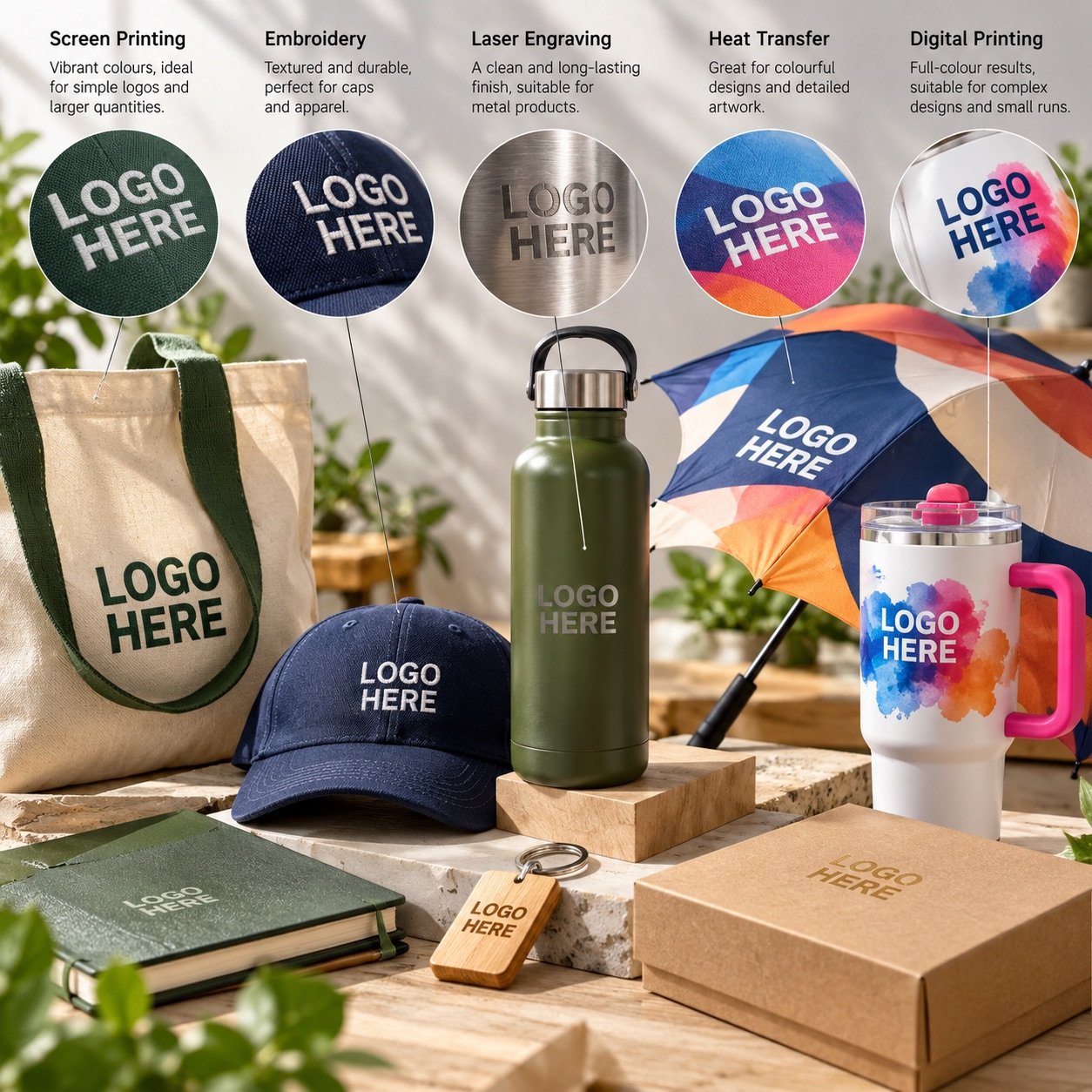
A simple logo can look different when screen printed on canvas, embroidered on a cap, laser-marked on stainless steel, or foil-stamped onto a gift box.
None of these methods is automatically the right choice for every order.
Start with the product material and intended use. Then consider how much detail the artwork contains, the visual effect required, and the quantity being produced.
At HS SOURCE GLOBAL, we can help review the product and artwork together before recommending a suitable customization process.
If you have a promotional product project in mind, share your product specifications, logo artwork, and estimated quantity with us. We can discuss which methods are practical for your design and compare the available options before quotation.